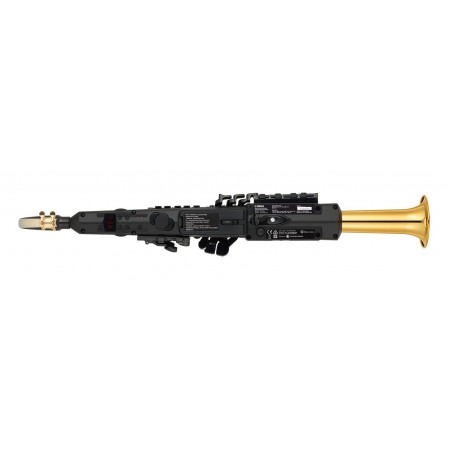
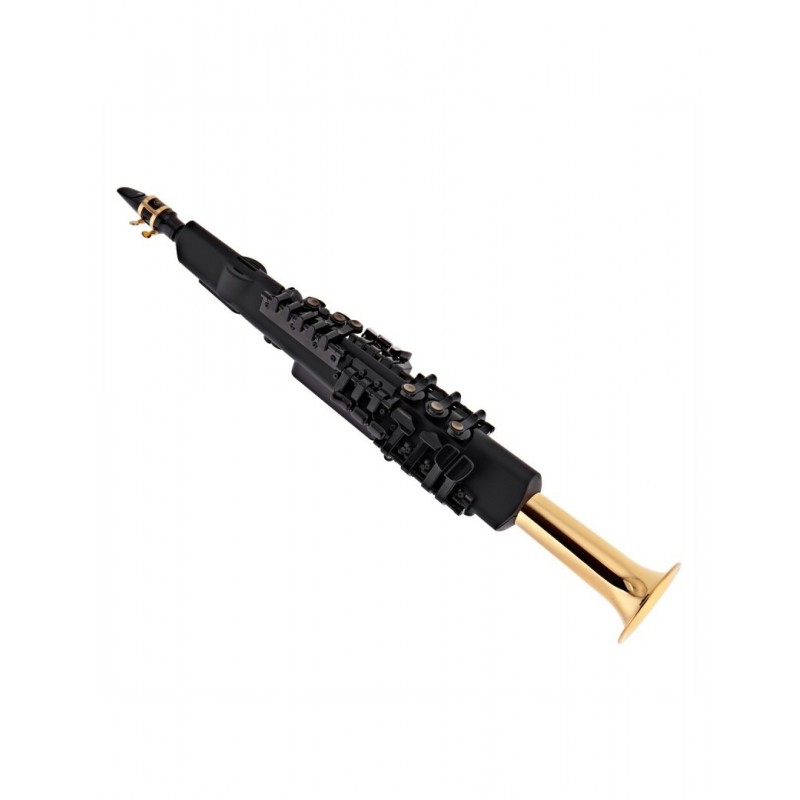
Yamaha YDS-150 Digital Saxophone

Yamaha YDS-150 Digital Saxophone

YDS-150
ASK FOR DELIVERY TIME
€681.82
  • Export Price: €681.82

Your cart is not eligible for payments with Alma.

Do you want to receive an alert when product is back in stock?

We will send you an email once the product becomes available. Your email address will not be shared with anyone else.
Payment

Payments

Exclusive online sales prices

Description

Digital Saxophone YDS-150 Allows You to Enjoy Playing Anytime, Anywhere

Yamaha Corporation announces the release of a new wind instrument product, the newly developed digital saxophone YDS-150.

The YDS-150 was designed to be a saxophone that would allow anyone to experience the joy of performing, anytime, anywhere. The groundbreaking new wind instrument retains the full expressiveness of the saxophone, yet unlike an acoustic saxophone it can be as quiet as you want, making it more convenient and easier to play.

Yamaha’s patented Integrated Bell Acoustic System is a fusion of traditional saxophone design and advanced digital technologies that offers the uniquely rich sound of an acoustic saxophone while also allowing you to enjoy playing without regard for time or place.

Sound can be produced by simply blowing into the mouthpiece, while volume and tone can be carefully modulated using the intensity of the breath, resulting in a wind instrument which can cater to the expressive needs of both beginners and experienced players alike.

Overview:

1) Play the saxophone anytime, anywhere - even if it’s in the living room, or at night

2) Experience playing in an innovative, new way - simply blow into the instrument to produce gorgeous saxophone sound

3) Experience authentic saxophone design and resonance

Smart Device App

Much more in depth control and customization can be achieved through the App, which connects to the YDS 150 via bluetooth.  Please search for YDS Controller when downloading the app on your smart device.  Please note that there is a manual in the setting area of the app which describes some of the app functions with tutorials.

Development Background

Development of the YDS-150 began with a desire to create a saxophone that could be played more easily and with more freedom by even more people. All of us have wished we could play a favorite tune at least once in our lives, and the YDS-150 makes that possible with a fusion of Yamaha’s acoustic and digital technologies. The instrument’s broad range of sound and rich expressiveness make it suitable for experienced saxophone players and beginners alike.

Integrated Bell Acoustic System (Patented)

Integrated Bell Acoustic System (IBAS) is an acoustic system developed specifically for the YDS-150 which reproduces the unique physical feedback (sound resonance and vibration) of an acoustic saxophone. The system consists of speaker units, an acoustic pipe, and a real brass bell, enabling it to effectively deliver sound resonance and vibration back to the player’s mouth and fingertips.

Product Details

About Yamaha

Yamaha's founder, Torakusu Yamaha, an entrepreneur of his time, reflected the technological awakening and openness to the world that Japan experienced with the change of century in business development.  

Raised in what is now Wakayama Prefecture, Yamaha received an unusual education for his time from his father, a samurai surveyor with interests in astronomy and mechanics, who had an extraordinary library in his home.

His early jobs included repairing clocks, medical and surgical equipment. Due to the isolation of his area, a city school asked him in 1887 to repair the Mason & Hamlin pipe organ, manufactured in the U.S. He was very fast to notice the the potential bussines of the musical instrument industry in Japan, and Yamaha produced its own version of the organ within a year and then established a new business in Hamasatsu to manufacture organs for Japanese elementary schools. 

Western musical traditions attracted the interest of the Japanese government, which encouraged and addressed the growing enthusiasm for their culture. While Yamaha's technical education enabled him to manufacture a product, the government's investment in infrastructure allowed him to set up a business. To make the organ, Yamaha used modern methods of mass production and by 1889 employed 100 people and produced 250 organs per year.

During the 1890s, the upright piano surpassed the pipe organ in popularity in U.S. homes (lower cost) and Yamaha quickly saw the potential of this market. Expansion into pianos required more research, so the Japanese Ministry of Education sponsored a Yamaha tour for the United States in 1899. He studied the manufacture of pianos and established the relationship with suppliers of the materials needed to produce pianos in Japan. Within a year he produced his first piano. Government and institutional orders were the first to be delivered, including some units for the Ministry of Education. In 1902, using American materials and German technology, Nippon Gakki (Yamaha´s company name at the time) presented his first grand piano. 

The Yamaha emblem: a set of three fretboards used to tune musical instruments, dates from 1898 and has been the image of their logos. These three fretboards have a particular meaning for each of the products of this great corporation. In the area of musical instruments they mean the three essential elements of music: melody, harmony and rhythm.

The entrepreneurial spirit of Yamaha continued without rest, and despite the death of its founder, the company continued to expand until today, being well known its incredible diversification: band and orchestra instruments, guitars, drums, electric keyboards and pianos, motors, electronics, motorcycles, boats... becoming one of the biggest companies worldwide. And everything started with a young man who repaired watches...

Reviews (0)

No reviews

You might also like

About Yamaha

Yamaha's founder, Torakusu Yamaha, an entrepreneur of his time, reflected the technological awakening and openness to the world that Japan experienced with the change of century in business development.  

Raised in what is now Wakayama Prefecture, Yamaha received an unusual education for his time from his father, a samurai surveyor with interests in astronomy and mechanics, who had an extraordinary library in his home.

His early jobs included repairing clocks, medical and surgical equipment. Due to the isolation of his area, a city school asked him in 1887 to repair the Mason & Hamlin pipe organ, manufactured in the U.S. He was very fast to notice the the potential bussines of the musical instrument industry in Japan, and Yamaha produced its own version of the organ within a year and then established a new business in Hamasatsu to manufacture organs for Japanese elementary schools. 

Western musical traditions attracted the interest of the Japanese government, which encouraged and addressed the growing enthusiasm for their culture. While Yamaha's technical education enabled him to manufacture a product, the government's investment in infrastructure allowed him to set up a business. To make the organ, Yamaha used modern methods of mass production and by 1889 employed 100 people and produced 250 organs per year.

During the 1890s, the upright piano surpassed the pipe organ in popularity in U.S. homes (lower cost) and Yamaha quickly saw the potential of this market. Expansion into pianos required more research, so the Japanese Ministry of Education sponsored a Yamaha tour for the United States in 1899. He studied the manufacture of pianos and established the relationship with suppliers of the materials needed to produce pianos in Japan. Within a year he produced his first piano. Government and institutional orders were the first to be delivered, including some units for the Ministry of Education. In 1902, using American materials and German technology, Nippon Gakki (Yamaha´s company name at the time) presented his first grand piano. 

The Yamaha emblem: a set of three fretboards used to tune musical instruments, dates from 1898 and has been the image of their logos. These three fretboards have a particular meaning for each of the products of this great corporation. In the area of musical instruments they mean the three essential elements of music: melody, harmony and rhythm.

The entrepreneurial spirit of Yamaha continued without rest, and despite the death of its founder, the company continued to expand until today, being well known its incredible diversification: band and orchestra instruments, guitars, drums, electric keyboards and pianos, motors, electronics, motorcycles, boats... becoming one of the biggest companies worldwide. And everything started with a young man who repaired watches...

Product added to compare.